Posts

Unwed Mothers & Giveaway Bastards: Surrendering the 70s
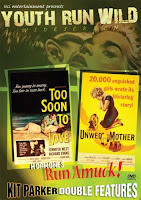
Image
It wasn't fashionable to be unmarried and pregnant in 1971. A "baby bump" was something to be hidden like an oozing pimple slathered with Clearasil. Unwed mothers were "loose" - wanton women best hidden in special "homes for the unwed mothers". It was probably a row home away from Leper Island. Rose, 19 years old, didn't think about it much, not that day. It was late spring and she was walking down Park Avenue in New York City. About 10 weeks into her pregnancy, she wore a blue belted shirt dress and black high heels. Her chestnut hair was swept into a chignon, her bangs nearly brushing her eyes. Well-read and under-educated, she imagined her life in literature – stories ending with tragic women and flawed men. Sister Carrie, Madame Bovary and Blanche Dubois were her companions. In 1971, America's culture seemed to be changing. The Viet Nam War continued while "flower-power" had withered into what was left of memory. The fi...

Laurel in Woodstock: Real History

Image
"Laurel is on the pages of Life magazine!” Roger shouted. It was days after Woodstock and celebrity was in the neighborhood. Laurel was our celebrity. She didn't just GO to Woodstock - she was memorialized in the pages of Life . No one was surprised. Like a celebrity, Laurel was also a stranger. Whenever and wherever she appeared, Laurel smelled like fresh sex in broad daylight. Laurel was gloriously wanton, whorishly flush when she'd smile at a new man. She was at least 25 years old, the first old hippie I met in the 1960s. Blue-eyed and beautiful, her dark roots peeking through short blonde curls, Laurel could run her fingers through her hair and take over a room upon entering. She commanded the panting admiration of younger men, older men and most in between. She was sleeping with Roger and Tom and maybe Rob, and didn't care if Richie Havens or Joe Cocker would show up to play at the rock festival. She was looking for somebody to do. It wasn't even a landmark e...

Snowbleed

Image
"Good morning, Princess Elizabeth," I'd say as we passed on the steps of the shabby apartment house where we both lived in 1971. Princess Elizabeth was my neighbor in Albany, NY, a cold Northeast city blanketed in snow from November into March. I was about 19 years old, a student/cocktail waitress.  Until the shots crackled and the blood droplets appeared on the snow, I didn't think much about Princess Elizabeth .  No one did. Princess Elizabeth may have been placed in the basement apartment by social services. I only recall our landlord’s request - that she was a nice woman who’d   been discharged from a hospital and needed a place where she would feel welcome. In the culture of the times, I agreed. I knew little about  deinstitutionalization  She introduced herself as Princess Elizabeth. She was frumpy, pudgy-faced and ever-cheerful. Unless she was screaming in the common back stairwell.  Middle-aged, her skin was more blotchy than lined. Her comfort...

Old Bags in Denial

Do I need a facelife or are we becoming a nation of old bags in denial?

Around the Kitchen Table

Image
Bull's Head Creek was in Staten Island, New York,  Port Richmond, across the street from Pop's house where my Dad grew up.  I wasn't allowed to play in the creek because it was "swimming in leeches",  my Dad said. But Pop's insisted the leeches had "medicinal " use for all sorts of ailments. The murky creek ran through a wooded area that disappeared when the Verrazano Bridge was built. The leeches were gone, too. After that, a lot of things changed at Pop's house. What remained at Pop's house was the big kitchen table.  The big kitchen table was the centerpiece of the home where my Dad grew up. It's where my Grandma  made homemade ravioli and spaghetti sauce from tomatoes Pop grew in his backyard garden. Sunday dinners brought people from around the neighorhood to the table. Pop would go to the cellar and draw a bottle of wine from one of the huge barrels and sit down - "Salud!" I wasn't born nor live...

Little Beach, Big Waves

Image
Little Beach is a small patch of sand cradled among scraggy rocks along the Marginal Way in Ogunquit, Maine, a resort village at the southern tip of the state. The Marginal Way is a path that wraps around the rocks and trees and seems to descend precipitously into the ocean; yet it guides visitors from Ogunquit to Perkins Cove, a fishing village dotted with artists' easles and boats that seem posed for a postcard. A quiet refuge from the umbrella-clad beach that extends several miles from Ogunquit to Welles, Little Beach is filled with sharp rocks, salt-bathed pebbles and water that chills the eyes at first glance. It is that cold. This is my memory of Little Beach, of course, forty years or so ago, when I was 10 and my Dad took me to the waterside in the morning while my Mom took an art lesson. I had my trusty float, a white blow-up raft adorned with turquoise blue designs and orange fish, equipped with a "see-through" panel to the sea below. Did I me...